
Why Property Size Changes Everything in Ranch Monitoring
A one-acre hobby farm and a 2,000-acre cattle operation have completely different surveillance needs. The number of traps, the distance between them, and the type of terrain all influence which cellular camera system performs best.
Choosing the wrong setup means either overspending on unused capability or missing critical coverage where it matters most. This guide breaks down exactly how to choose the right cellular camera system for your ranch based on property size and use case.
What Matters Most When Choosing a Ranch Cellular Camera
Before looking at acreage, consider three core factors that impact any ranch monitoring setup:
- Coverage Area – How many acres or trap zones require monitoring?
- Connectivity – How strong is your 4G or 5G coverage across the property?
- Power and Maintenance – Can the system stay powered without daily visits?
Once you know the answers, you can narrow down the right system for your ranch.
For Small Farms and Hobby Properties (Under 50 Acres)
If your goal is to monitor a small pasture, garden, or livestock pen, you do not need a high-bandwidth live feed running 24 hours a day.
Ideal Setup
- Recommended Camera Type: Entry-level photo-alert cellular cameras
- Typical Coverage Needs: 1 to 3 cameras
- Power Source: Rechargeable or solar battery
- Ideal Brands: Vosker, Muddy, or Browning
Vosker cameras perform well for small farms that require simple photo alerts instead of continuous video. They offer long battery life, low data use, and quick setup.
Pros and Cons
| Pros | Cons |
| Affordable initial cost | No live monitoring or trap integration |
| Long battery life | Delayed alerts (30–90 seconds) |
| Easy to relocate | Limited visibility per zone |
For small-acreage users who only visit their land occasionally, photo-based systems are often enough.
For Mid-Sized Ranches (50–300 Acres)
This range covers most working ranches and hunting leases across the southern United States, where properties include multiple bait sites, feeders, or trap zones.
Ideal Setup
- Recommended Camera Type: Live-video cellular systems
- Typical Coverage Needs: 3 to 6 cameras per 100 acres
- Power Source: Solar kit with backup battery
- Recommended System: HogEye Mini
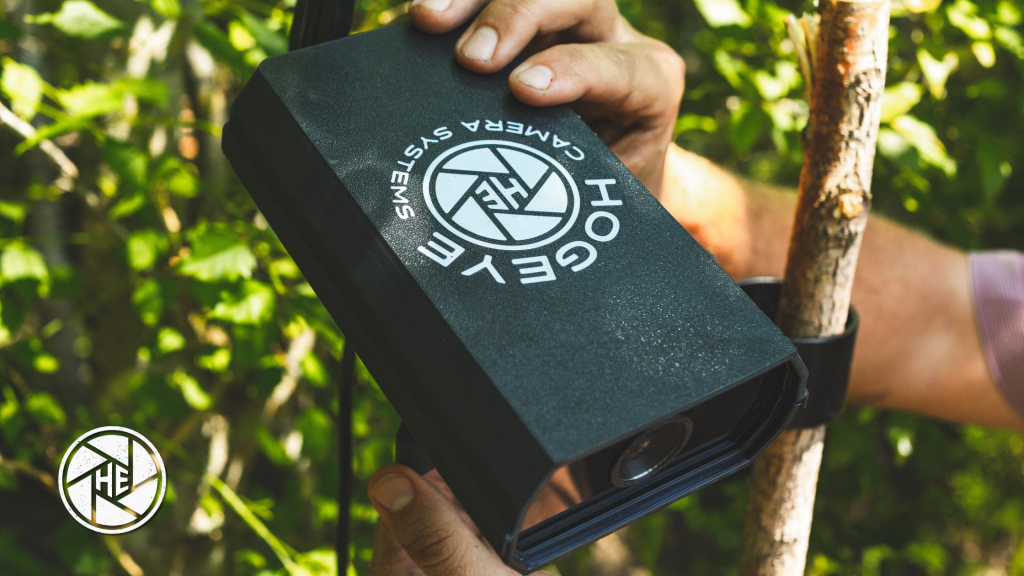
HogEye’s live feed capability allows ranchers to monitor traps in real time, identify animal movement patterns, and trigger gates remotely. This setup eliminates daily travel and maximizes trap efficiency.
Why It Works
In states like Texas, Mississippi, and Alabama, where traps may sit miles apart, remote access saves 10 to 20 hours of fieldwork per week. By pairing each camera with a solar kit, users gain 24/7 uptime across multiple locations without increasing labor.
For Large Ranches and Wildlife Management Properties (300+ Acres)
Large operations with multiple active traps or livestock zones require reliable, centralized visibility.
Ideal Setup
- Recommended Camera Type: Advanced cellular network system with multi-trap coverage
- Typical Coverage Needs: 8+ cameras connected via cloud monitoring
- Power Source: Solar and hardwired hybrid systems
- Recommended System: HogEye Enterprise Setup
Why HogEye Is the Clear Choice
- Network Coordination – Multiple cameras feed into one dashboard so you can monitor every trap simultaneously.
- Live Triggers Across Locations – Drop gates or nets remotely on multiple properties without driving out.
- Weatherproof Build – Handles year-round exposure from Florida humidity to Oklahoma dust storms.
For ranchers operating 500+ acres, the ROI compounds quickly. A single full-sounder capture pays for the equipment, and the fuel savings continue every month.
How to Calculate Cellular Camera Density for Your Ranch
A good rule of thumb is one camera for every 25 to 50 acres of high-activity terrain. Larger ranches often deploy cameras strategically near:
- Trap sites and bait zones
- Feed plots and crop edges
- Access gates and property boundaries
Using HogEye’s live map integration, you can visualize coverage areas and reposition cameras without visiting the site—making multi-acre management far easier.
Why HogEye Works Better as You Scale
The bigger your property, the more valuable live monitoring becomes. Each additional mile of travel increases cost, risk, and lost time.
| Feature | Small Farm (Under 50 Acres) | Mid Ranch (50–300 Acres) | Large Ranch (300+ Acres) |
| Camera Type | Photo alert | Live cellular | Multi-feed cellular network |
| Recommended Brand | Vosker (nofollow) | HogEye Mini | HogEye Enterprise |
| Primary Goal | Security | Trap monitoring | Full ranch management |
| Setup Complexity | Simple | Moderate | Advanced |
| Estimated ROI (1 Year) | Moderate | High | Very high |
When property size grows, the efficiency gap between photo systems and live systems becomes impossible to ignore.
Field Example: Multi-Trap Monitoring in Central Texas
A rancher managing over 400 acres near Fredericksburg, Texas, deployed five HogEye cameras across three trap zones. Within 90 days, he reduced site visits by 60 percent, saved over $1,000 in fuel, and increased his full-sounder captures from three per month to seven.
By contrast, his older photo-based cameras on another property provided only delayed updates, leading to half-empty traps and wasted feed.
Choosing the Right System for Your Ranch
If your goal is simple awareness, Vosker and similar systems deliver basic visibility. But if you need control, precision, and scalability, HogEye provides the full package: live video, remote trap activation, solar uptime, and network expansion as your property grows.
Start with one camera, expand as your land demands, and manage every acre with real-time insight.
See how HogEye can scale with your property today
Shop now: https://hogeyecameras.com/buy-now/