
Why Pair Cellular Cameras with a Hog Trap at All?
Capturing feral hogs efficiently is all about timing. Trigger too soon and half the sounder escapes. Wait too long and the bait disappears or hogs become trap-shy, which is why many ranchers now rely on cellular cameras to know exactly when to act.
Pairing cellular cameras with your traps gives you total control over that timing. HogEye cameras provide a live video feed that lets ranchers confirm when every hog has entered before triggering the trap. This eliminates guesswork and increases full-sounder capture rates dramatically.
Across high-pressure regions such as Texas, Mississippi, Arkansas, and Florida, this combination of live monitoring and trap precision is becoming the standard for effective hog control.
How Do Cellular Cameras Work with a Trap System?
Step 1 Position for Visibility
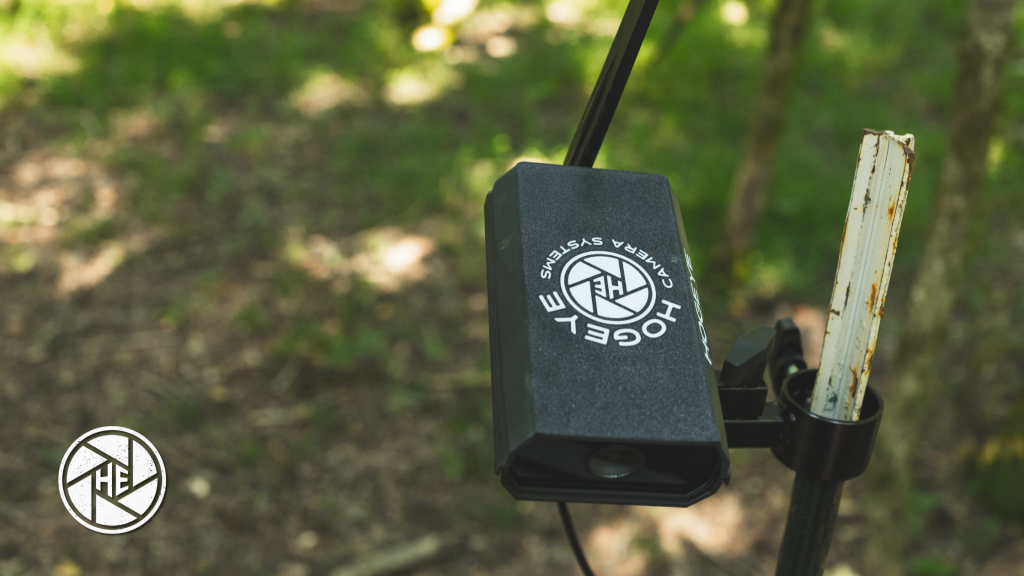
Mount the HogEye Mini 10 to 15 feet from the gate, angled toward the bait zone. This ensures a wide field of view and minimizes false motion alerts from grass or wind.
Step 2 Power and Connectivity
Use a solar kit or long-life battery to maintain uptime. Check 4G or 5G coverage before deployment. In heavily wooded areas or levee edges, raise the camera slightly for better reception.
Step 3 Motion Alerts and Live Feed
Once motion is detected, HogEye sends an alert and opens a live video feed. You can then verify exactly how many hogs have entered before deciding to close the trap.
Step 4 Remote Triggering
HogEye integrates seamlessly with electronic gate and net systems. From your phone or desktop, you can drop the gate instantly and confirm the capture in real time.
What Are the Real Advantages Over Trail Cameras?
Traditional trail cameras take photos after movement. By the time you see them, the hogs are gone.
Real-Time Decision Making
HogEye lets you act while the sounder is still inside the trap. This ensures complete captures rather than partial ones that condition survivors.
Continuous Monitoring
With solar power, cameras remain online for weeks without maintenance. You can check traps remotely and avoid daily site visits, saving both time and fuel.
What Trap Designs Work Best with HogEye Cameras?
Panel and Corral Traps
These are ideal for large-group captures. Mounting a HogEye camera above or outside the entrance provides clear visuals of entry patterns.
Passive Net Systems (Boar Blanket Case Study)
For smaller or mid-sized sounders, net traps such as the Boar Blanket pair perfectly with HogEye cameras.
In a documented Boar Blanket case study, a landowner near the Mississippi River faced recurring damage from a group of twelve hogs that returned nightly. The property was remote, located across a levee and several miles from the nearest power source.
The rancher deployed a Boar Blanket net trap and monitored it using a HogEye camera. The live feed allowed him to see when the first hog entered and monitor group behavior from hours away. Once the full sounder was inside, he triggered the trap remotely.
The outcome was a complete twelve-hog capture in a single night. The hogs remained contained for over four hours until the rancher arrived, confirming both the net’s holding strength and the HogEye system’s reliability.
At a second property four miles north, the same operator used a panel trap for larger groups of twenty-plus hogs, proving that HogEye’s monitoring flexibility supports both trap types depending on sounder size.
This real-world success demonstrates that pairing HogEye’s live video monitoring with Boar Blanket’s passive containment delivers maximum efficiency across different terrains and herd sizes.
How Do Weather and Terrain Affect Performance?
Both trap and camera systems must handle extreme conditions.
- Water Resistance: HogEye cameras feature sealed enclosures tested for constant outdoor exposure, ideal for humid regions near the Mississippi Delta.
- Signal Optimization: In bottomland or forested terrain, mount cameras slightly above eye level for better coverage.
- Solar Efficiency: For off-grid setups, south-facing panels in clear sunlight zones maintain battery health for continuous operation.
What Should You Check Before Leaving a Trap Unattended?
- Test the live feed and verify video clarity.
- Activate a mock trigger to confirm gate responsiveness.
- Review motion sensitivity settings at different times of day.
- Check solar charge or battery health after 24 hours.
A 10-minute test run ensures no missed captures or false alerts once the system goes live.
How Does This Integration Improve ROI?
Integrating HogEye cameras with traps cuts both operational and opportunity costs:
- Reduced Travel: Ranchers near the Mississippi River levee reported saving more than 15 hours of travel per week by eliminating routine trap checks.
- Higher Capture Rates: Live video ensures full-sounder capture instead of wasted bait cycles.
- Lower Feed Loss: Real-time observation prevents over-baiting and discourages raccoon interference.
- Data-Driven Insights: Continuous footage helps ranchers refine trap placement and timing based on actual animal patterns.
Within a single season, most operators see the system pay for itself through reduced fuel use, faster captures, and improved land recovery.
The Bottom Line: Why Cellular Cameras Matter
HogEye’s live-video monitoring turns traditional hog trapping into a precise, efficient process. When paired with traps like the Boar Blanket, ranchers gain total control, even in remote or off-grid locations.
For property owners dealing with recurring hog damage across the southern states, this integrated approach is proving to be the future of feral hog management—real-time, reliable, and results-driven.
Explore HogEye Cameras [https://hogeyecameras.com/buy-now/]