
HogEye vs. Trail Cameras: Which System Actually Works for Hog Trapping in 2026?
Trail cameras excel at wildlife observation, but they fall short at the most critical part of modern hog trapping: real-time sounder monitoring and remote gate control. According to field deployment data, photo-based trail cameras deliver alerts 30–90 seconds after motion detection—long after a sounder may have already exited a trap site. HogEye cameras stream live HD video, allowing trappers to count hogs, verify full sounder composition, and trigger traps remotely at the exact right moment. For land managers and ranchers running active hog trapping programs, this difference often determines whether you capture an entire sounder—or educate hogs and walk away empty-handed.
Why Land Managers Buy Trail Cameras (And Why They Stop Using Them for Traps)
-
Trail Cameras Were Designed for Hunting, Not Trapping
- Optimized for documenting deer movement patterns
- Photo burst mode captures multiple images per trigger
- “Set and forget” approach works for scouting
- Fails when precise timing and active control are required
-
The 90-Second Problem
- Motion-triggered photo → processing → upload → notification = 30-90 second delay
- Full sounder can enter, feed, and exit in under 2 minutes
- First photo often shows hogs already leaving frame
- No ability to verify entire group is inside trap
Real Rancher Quote:
“I was getting trail camera alerts on my phone, but by the time I opened the app and saw the photo, the hogs were already gone. I needed to see them live.” — Mississippi landowner, captured 12 hogs using HogEye live feed
The 5 Critical Differences Between Trail Cameras and HogEye
Comparison Table:
| Capability | Standard Trail Cameras | HogEye Camera System |
| Video Type | Photo bursts or short video clips | Continuous live HD streaming |
| Response Time | 30-90 seconds after motion | Instant real-time feed |
| Remote Triggering | Not supported | One-touch app control |
| Night Vision | IR photos only | Full IR live video |
| Power Options | Battery or solar (8-12 AA) | Hybrid (AC/solar/battery) |
| Data Usage | Minimal (photos) | Stream-optimized |
| Multi-User Access | Limited sharing | Unlimited app users |
| Trap Integration | Observation only | Direct gate/trigger control |
| Weatherproofing | IP65-IP66 | Industrial IP67+ |
| Primary Use Case | Wildlife scouting | Active trap management |
When Trail Cameras Work (And When They Don’t)
✅ Trail Cameras ARE Good For:
- Scouting hog activity on the property
- Documenting movement patterns over weeks/months
- Identifying travel corridors and bedding areas
- Low-cost passive observation
- Locations with no cell service (SD card retrieval)
❌ Trail Cameras FAIL For:
- Real-time trap triggering decisions
- Verifying entire sounder is inside trap
- Remote monitoring during live trapping events
- Two-way communication with trap systems
- Operations requiring immediate response
Read more about cellular connectivity challenges in remote trapping locations.
How HogEye Solves What Trail Cameras Can’t
Live Video Feed = Real-Time Decision Making
-
- Stream opens instantly in the mobile app
- Watch sounder approach, count members, verify juveniles/adults
- No guessing based on still photos from 60 seconds ago
Remote Trap Triggering Integration
-
-
- One-touch gate closure from smartphone within seconds
- Control when you trigger, allowing you to trap the entire sounder inside
- Prevents partial captures that educate surviving hogs
-
Multi-User Access for Operations
-
- Property owner monitors from home
- Trap technician receives alerts in field
- Wildlife manager accesses footage for reporting
- Unlimited concurrent users on same feed
Weatherproof Industrial Design
-
- Built for 24/7 outdoor operation in mud, rain, heat
- External antenna maintains signal in remote locations
- Hybrid power prevents battery failures
The Cost Question: Is HogEye Worth the Investment?
Typical Trail Camera Setup:
- Bushnell Core DS-4K: $250-$350
- Monthly cellular plan: $5-$15
- Limitations: Photo-only, no trap control, 30-90 sec delay
- First-year cost: $300-$530
HogEye Camera System:
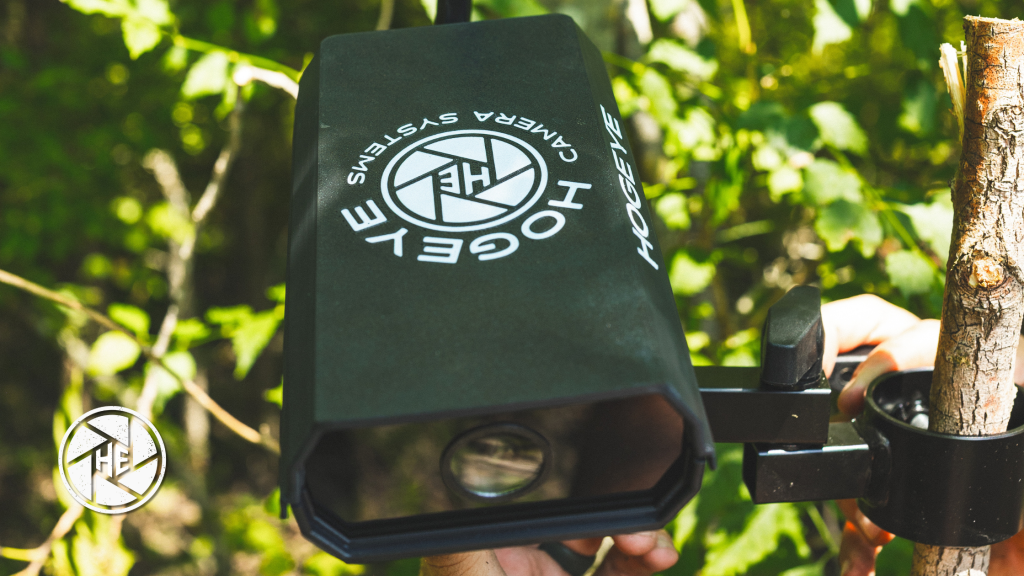
- HogEye Mini Camera: ~$2,200
- Flexible data plan: included, no contracts
- Capabilities: Live video, remote triggering, multi-user, trap integration
- First-year cost: ~$2,200
ROI Calculation:
Single successful sounder capture (12 hogs) prevents:
- $8,000-$15,000 in crop damage
- $2,500-$5,000 in follow-up thermal shooting costs
- 24-36 offspring from reproductive-age sows (population multiplication)
Net savings after one capture: $8,000-$20,000
System pays for itself in: First trapping cycle
Real Field Comparison: Trail Camera vs. HogEye
Scenario: 12-hog sounder visiting trap site nightly
Using Trail Camera:
- Day 1-3: Photos confirm hog activity
- Day 4: Alert arrives showing 3 hogs in frame
- Rancher drives 45 minutes to property
- Arrives to find trap empty—hogs left before arrival
- Resets bait, repeats process
- Result after 2 weeks: 2 hogs captured (partial sounder), rest now trap-shy
Using HogEye:
- Day 1-3: Live video confirms sounder composition
- Day 4: Rancher watches live feed from home
- Counts 12 hogs entering trap over 8-minute period
- Triggers gate remotely when last hog enters
- Result after 2 weeks: 12 hogs captured in single event
Learn more about why DIY camera modifications void warranties and reduce reliability
Common Questions: Trail Cameras vs. HogEye
Q: Can I use my existing trail camera with HogEye?
A: Yes, trail cameras complement HogEye for scouting secondary locations. Use trail cameras to identify high-activity zones, then deploy HogEye at active trap sites for live monitoring and triggering.
Q: Do I need cell service for both systems?
A: Both cellular trail cameras and HogEye require some cell signal. HogEye’s external antenna design maintains connectivity in weaker signal areas where internal-antenna trail cameras may fail.
Q: What if I’m only checking traps once per week?
A: Trail cameras work for infrequent passive observation. HogEye is designed for active trap management—if you’re running baited traps with gate triggers, real-time video is essential for maximum capture efficiency.
Q: Can HogEye cameras be used for anything besides hog trapping?
A: Absolutely. HogEye systems monitor cattle, predators, trespassers, equipment theft, and property security—any application requiring live response rather than delayed documentation.
Which System is Right for Your Operation?
Choose Trail Cameras If:
- You’re scouting hog activity before committing to trapping
- Budget is under $500 total
- You check traps manually (no remote triggering)
- Your property has no cell service at all
Choose HogEye If:
- You’re actively trapping with baited gates/triggers
- You want control over when you trap hogs
- You want to capture entire sounders (not partial groups)
- You manage multiple trap sites remotely
- You need verifiable footage for property records or agency reporting
- You value your time more than driving to check traps
Different Tools for Different Jobs
Trail cameras document wildlife. HogEye cameras control wildlife operations. For trappers serious about population reduction—not just observation, the distinction is binary. Live video, remote triggering, and real-time verification transform trapping from reactive guesswork to proactive management.
See the difference live video makes. Explore HogEye camera systems built for professional trap management.