
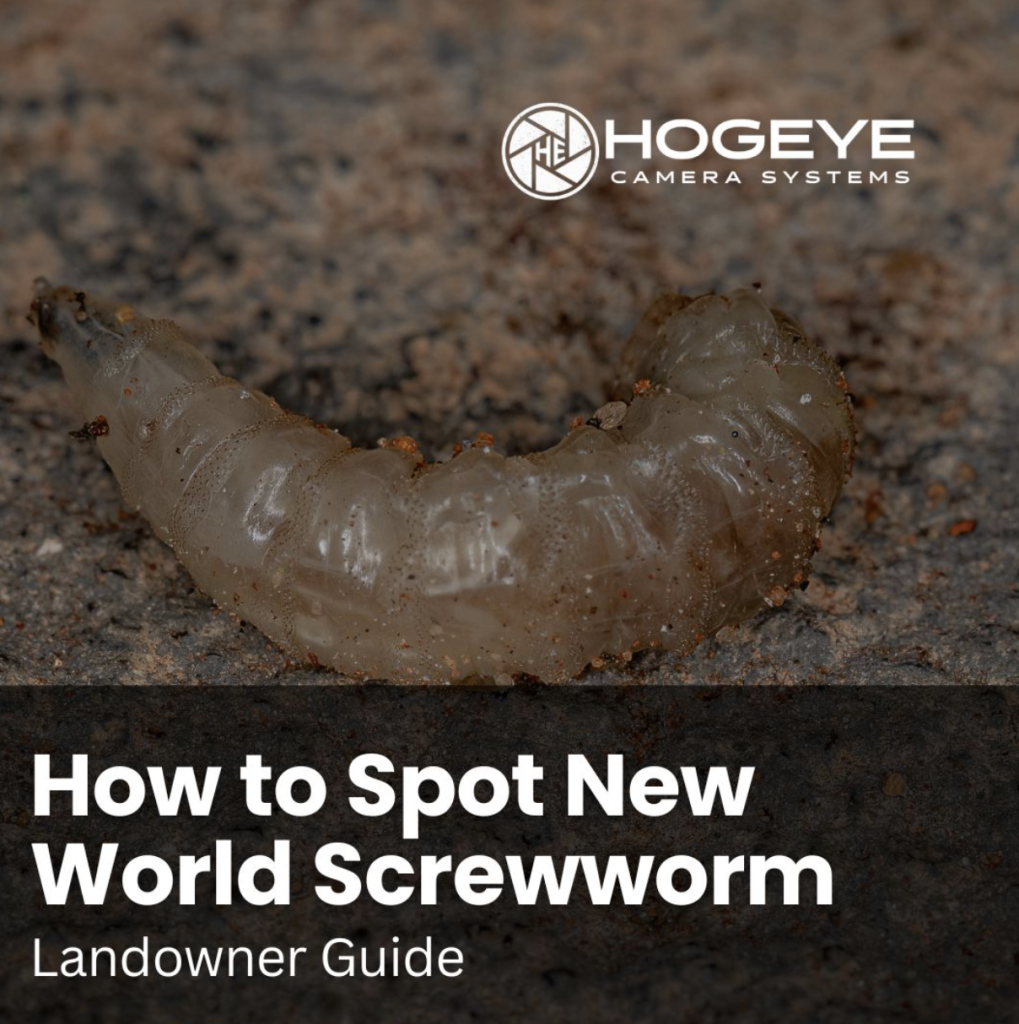
Most landowners will never need to treat a case of screwworm, but plenty will be the first person to see one. That makes awareness the job: knowing what New World Screwworm looks like, what it does not look like, and who to call the moment you have a real concern. Catching it early is a reporting problem, not a doctoring problem.
This guide is written for landowners, land managers, and trappers across Texas and the Gulf South. It does not cover treatment protocols on purpose. Diagnosis, confirmation, and response belong to USDA APHIS and your state agricultural extension office, and the most useful thing you can do is recognize a possible case and get it to them quickly.
Start With What Screwworm Is, So You Know What to Look For
New World Screwworm is the larval stage of a parasitic fly. Per USDA APHIS, the fly lays eggs at the edge of a fresh wound on a living, warm-blooded animal, and the larvae feed on living tissue. That is the key behavior to keep in mind while you look: screwworm is about a live animal and an active wound, not about waste, dirt, or an old carcass.
Hold onto the field rule before you go any further: if it’s on shit, that isn’t it. Screwworm does not breed in manure. Maggots in feces or in a long-dead carcass are an ordinary fly doing ordinary work, not a screwworm case.
Signs Worth a Second Look
You are watching wounds on live animals, including cattle, pets, wildlife, and feral hogs. According to USDA APHIS guidance, signs that warrant attention include the following. Treat these as reasons to call, not as a diagnosis you make yourself.
- A wound that seems to get worse, not better. An injury that enlarges or deepens over a few days instead of healing.
- Maggots set deep in a wound on a live animal. Larvae burrowing into living tissue, often packed in head-down, rather than sitting on the surface.
- A distinct odor and fluid. A foul smell or discharge coming from the wound.
- Behavior changes. An animal that is isolating, off its feed, or fixated on a particular spot on its body.
- Common entry points. Recent wounds from fighting, fencing, branding or castration, tick or insect bites, or the navel of a newborn.
If you see several of these together on a live animal, stop looking for certainty and start making the call.
What It Is Not
Awareness cuts both ways. Knowing what screwworm is not keeps you from raising a false alarm and from ignoring a real one.
- Not maggots in manure or waste. That is a different fly. If it’s on shit, that isn’t it.
- Not maggots on an old carcass. Screwworm targets living tissue and very recently deceased animals, not long-dead ones.
- Not something you confirm from a photo alone. Visual signs raise suspicion. Confirmation is a laboratory and agency matter.
When in doubt, you do not have to be right. You have to report.
Who to Call, and Why Reporting Comes First
If you suspect New World Screwworm, contact USDA APHIS and your state agricultural extension office before doing anything else. Screwworm is a reportable concern precisely because it spreads with its hosts, and a fast report is what lets the people with the tools and the authority respond. This is not a problem you should attempt to treat on your own, and over-the-counter guesswork can cost time that matters.
Write down what you saw, when, and where. A clear location and timeline helps the response far more than a blurry close-up.
Where Feral Hogs Complicate the Picture
Here is the part landowners underestimate. You can inspect the animals you own. You cannot inspect a wild sounder. Feral hogs travel widely, fight, and wound each other constantly, and they move across your property with no one checking them. They are a large, mobile, unwatched host population sitting right next to the animals you do watch.
You will not spot a screwworm wound on a hog crossing your land at night. What you can do is stop pretending the hogs are not there. Knowing which sounders use your property, where they cross, and how often they return is the difference between a true blind spot and a part of the property you can account for. A remote hog trap monitoring setup gives you that awareness, so the unwatched animals become a known quantity instead of a gap. For placement and setup references, see the camera resources library.
To be clear: a camera never diagnoses screwworm. It closes the visibility gap on the hosts nobody else is watching, which is its own kind of early awareness. Diagnosis stays with USDA APHIS and your state extension office.
Frequently Asked Questions
What does New World Screwworm look like?
Per USDA APHIS, look for a wound on a live animal that worsens over days, with maggots burrowed deep into living tissue, often with a foul odor and discharge. These are reasons to report, not to self-diagnose.
How is screwworm different from regular maggots?
Regular maggots feed on waste and dead tissue. Screwworm larvae feed on the living tissue of a wounded, live animal. The field rule: if it’s on shit, that isn’t it.
Who do I call if I suspect screwworm?
Contact USDA APHIS and your state agricultural extension office immediately. Screwworm is a reportable concern, and fast reporting is what enables an effective response.
Should I treat a suspected screwworm wound myself?
No. Reporting comes first. Diagnosis, confirmation, and treatment are handled by USDA APHIS and your state extension office, not by guesswork on the property.
How do feral hogs factor into spotting screwworm early?
You cannot inspect wild hogs, but they are a wide-ranging, frequently wounded, unwatched host. Knowing where they are active closes a visibility gap that inspecting only your own animals leaves wide open.
Ready to See the Unwatched Part of Your Property?
HogEye gives you live awareness of which hogs are using your trap sites and when, so the hosts nobody else is watching stop being a blind spot.
Talk with the HogEye team about monitoring your trap sites →