
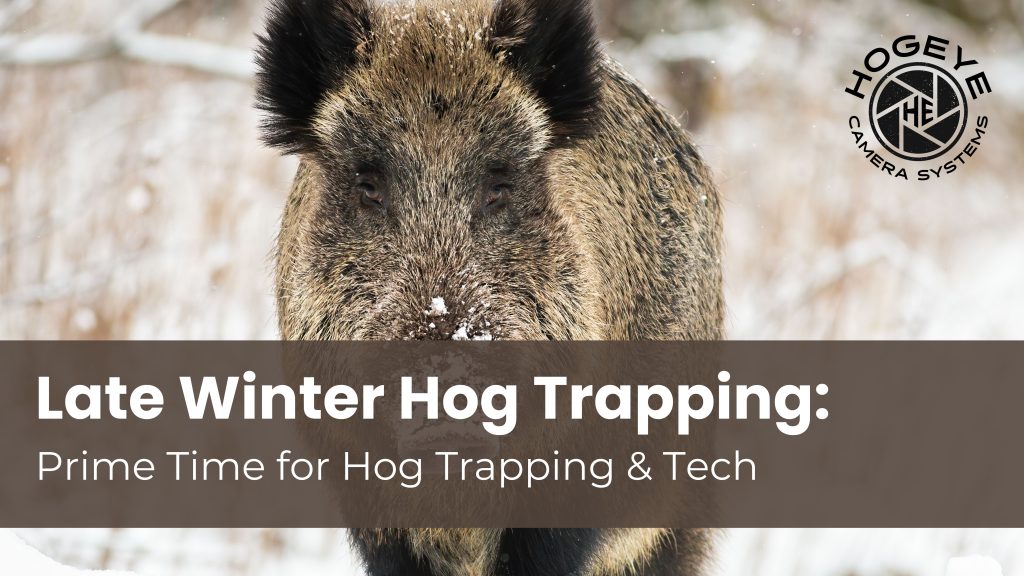
Winter hog trapping from January through March represents the most effective window for feral hog control. According to integrated pest management research, winter trapping can eliminate 70–80% of local populations when properly executed. Cold weather drives predictable feeding patterns, depletes natural food sources, and concentrates sounders—but these advantages require real-time monitoring to capture entire groups. This guide explains the biological, strategic, and technological factors that make January the optimal month to launch hog management operations.
The Biology Behind Winter Hog Trapping Success
-
Hogs Burn More Calories in Cold Weather
- Increased metabolic demands drive aggressive feeding
- Daytime foraging to capture warmth and sunlight
- More predictable movement patterns along riverbeds and valleys
-
Natural Food Sources Are Depleted
- Fall mast crops (acorns, hickory nuts) exhausted by late December
- No agricultural row crops planted—baited sites become primary food source
- Hogs become opportunistic feeders: roots, tubers, invertebrates
-
Sounders Form Larger Groups for Protection
- Cold weather prompts grouping behavior for warmth
- Larger sounders = higher capture value per trap event
- Entire families (juveniles, sub-adults, pregnant sows) feed together
Research from the Integrated Wild Pig Control (IWPC) protocol shows winter trapping can achieve 70-80% population reduction in 90 days when targeting entire sounders—compared to 20-30% effectiveness from year-round opportunistic trapping.
Why January Specifically? The Ranch Planning Advantage
-
Ranchers Are in Planning Mode
- January is “planning season” for ranch operations
- Budget decisions, equipment audits, goal-setting happen now
- Operational bandwidth available before spring calving/planting
-
Winter Hog Trapping Sets Up Spring Success
- Reduced hog pressure during planting season
- Protected crop emergence and livestock farrowing
- Prevents population rebound before summer breeding peaks
A Mississippi landowner deployed HogEye cameras in mid-January and captured 12 hogs in one night by monitoring live video feed remotely. By acting during the winter window, he prevented spring crop damage estimated at $8,000+.
The Technology Factor: Why Remote Monitoring Changes Winter Hog Trapping
-
Traditional Methods Miss the Window
- Physical trap checks in cold weather reduce efficiency
- Hogs may enter/exit between check intervals
- Partial captures educate surviving hogs to avoid traps
-
Live Video Enables Perfect Timing
- Monitor entire sounder entry in real-time
- Trigger trap remotely when all hogs are inside
- No travel required in winter weather conditions
-
HogEye Cameras Solve the Remote Monitoring Challenge
- Live HD video feed (not photo alerts that arrive 30-90 seconds late)
- 4G LTE connectivity with external antenna for rural signal strength
- Hybrid power design (AC, solar, battery) works in shaded winter conditions
- Weatherproof industrial housing rated for mud, rain, freezing temperatures
Comparison Table:
| Feature | Photo Alert Cameras | HogEye Live Video |
| Response Time | 30-90 seconds after motion | Real-time |
| Trigger Control | Manual post-alert | Remote one-touch |
| Winter Reliability | Battery drain in cold | Hybrid power system |
| Sounder Capture Rate | 20-30% (partial catches) | 70-90% (full sounders) |
| Best Use Case | Passive observation | Active trap management |
Common Winter Hog Trapping Mistakes (And How to Avoid Them)
- Mistake #1: Trapping year-round instead of concentrating efforts in winter
- Mistake #2: Using trip wires that trigger too early, missing late-arriving hogs
- Mistake #3: Relying on physical trap checks instead of remote monitoring
- Mistake #4: Not pre-baiting long enough to pattern entire sounder (5-7 days minimum)
Your January Hog Trapping Checklist
Week 1: Planning & Site Selection
- Review last year’s hog damage areas
- Identify high-activity zones using trail camera data
- Order equipment (cameras, traps, bait)
Week 2: Camera Deployment & Pre-Baiting
- Install HogEye cameras at trap sites
- Begin pre-baiting with whole kernel corn
- Monitor sounder size and visit frequency
Week 3: Pattern Recognition
- Confirm entire sounder feeding together
- Identify juveniles, sub-adults, pregnant sows
- Set trap trigger parameters in HogEye app
Week 4: Active Trapping
- Execute remote trap triggers during peak feeding
- Document captures for property records
- Relocate cameras to secondary sites
Why Waiting Until Spring Costs More Than You Think
- Spring hog damage to newly planted crops
- Increased farrowing = population multiplication
- Lost opportunity to capture entire sounders before dispersal
- Higher thermal shooting costs in summer vegetation
ROI Calculation:
Average winter trap investment: $5,000 (HogEye camera + trap system)
Prevented spring crop damage: $15,000-$25,000
Net savings: $10,000-$20,000 in first season
Conclusion: January is Your Strategic Advantage
Cold weather concentrates hogs. Ranch planning season provides operational bandwidth. Live video monitoring enables precise sounder capture. The convergence of these three factors makes January through March the highest-ROI period for hog control investments.
Start your 2026 hog management strategy with proven technology. Explore HogEye camera systems built specifically for remote trap monitoring.