
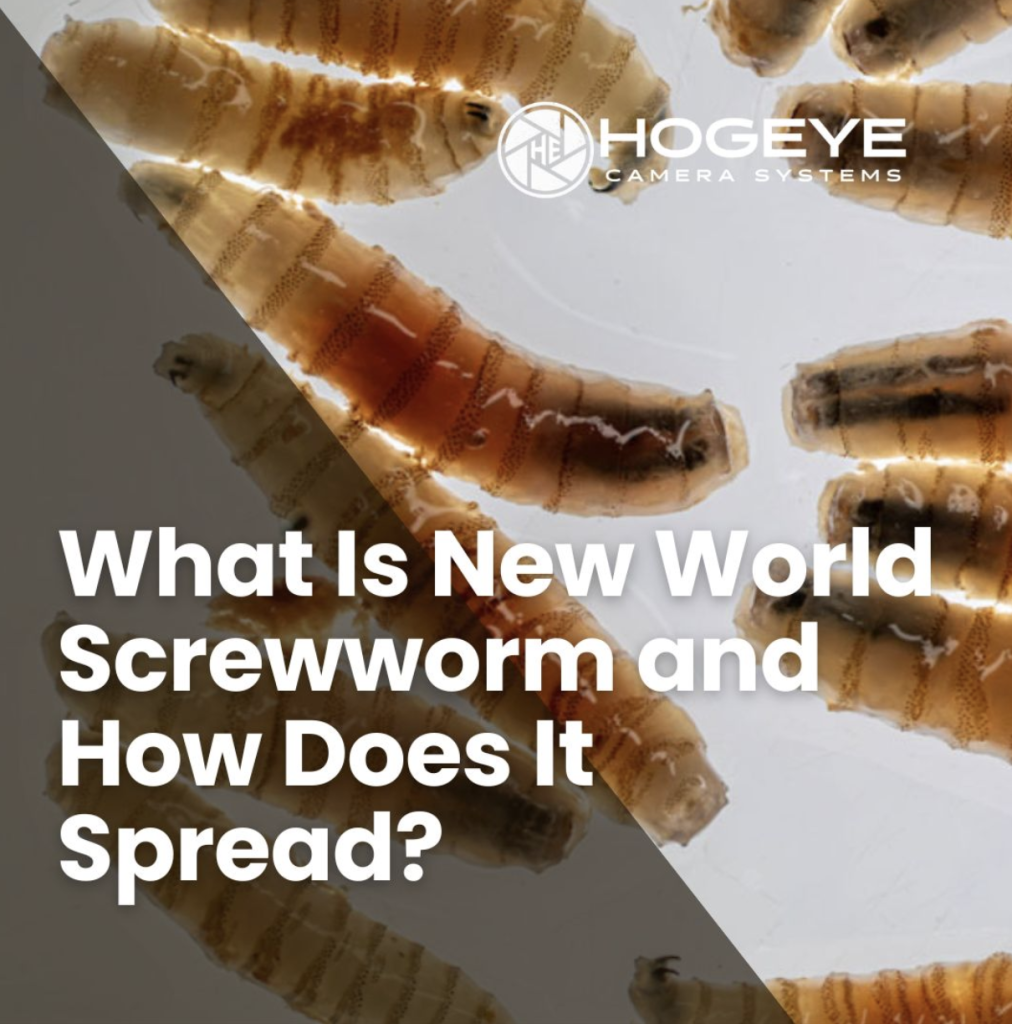
If you manage land in Texas or the Gulf South, you have probably started hearing the term “screwworm” again, usually with very little explanation attached. The word gets used loosely, and most of what circulates is either alarmist or wrong. Before you can decide whether it changes anything about how you run your property, you need a clear answer to a simple question: what is screwworm, and what actually puts an animal at risk.
This is an awareness guide, not a veterinary manual. The goal is to give landowners, land managers, and trappers an accurate picture of what New World screwworm is, how it spreads, and why feral hog pressure turns it into a monitoring problem rather than just a livestock one. For clinical guidance and reporting, the authority is USDA APHIS and your state agricultural extension office, and we point you to them throughout.
What New World Screwworm Actually Is
New World screwworm is the larval stage of a parasitic fly (Cochliomyia hominivorax). Per USDA APHIS, the female fly lays her eggs at the edge of a wound or a moist opening on a living, warm-blooded animal. When the eggs hatch, the larvae feed on living tissue, which is what separates screwworm from the ordinary flies that show up around a carcass or a manure pile.
That distinction matters, and there is a blunt field rule worth remembering: if it’s on shit, that isn’t it. Screwworm does not breed in feces, and it is not a sign of a dirty pen. It targets live animals, and occasionally very recently deceased ones. A maggot in waste or in an old carcass is a different, far more common fly, not screwworm.
The practical takeaway for a landowner is that screwworm follows living hosts. Cattle, wildlife, pets, and feral hogs are all warm-blooded animals that can carry it, and any fresh wound, from castration to a barbed-wire cut to a tick bite, is a potential entry point.
How Screwworm Spreads
Screwworm spreads through two linked mechanisms, and understanding both is what makes the risk concrete.
- The fly finds a wound. Adult females are drawn to the scent of a fresh wound or a mucous membrane on a live animal. They lay eggs in tight, shingle-like batches right at the margin.
- Infested animals move. Once larvae are feeding, the animal carries the infestation as it travels. A mobile host moves the problem to new ground, and emerging flies can start the cycle again on the next available wound.
USDA APHIS has historically managed screwworm through coordinated detection and sterile-fly programs precisely because the parasite travels with its hosts. For a landowner, the spread model is the important part: this is not a stationary problem you can fence out. It moves at the speed of the animals on your property, and some of those animals are not the ones you are watching.
Why It Matters in Texas and the Gulf South
The states where this conversation is loudest are the ones with the most exposure. Texas carries the largest share of attention, with Mississippi, Louisiana, Oklahoma, and Alabama close behind. These are warm, humid, high-traffic corridors for both livestock and wildlife, and they are the same places where feral hog densities are highest.
That overlap is the issue. A cattle operation can inspect its herd, treat fresh wounds, and watch closely during high-risk procedures. The animals nobody is checking, including deer, other wildlife, and feral hogs, move through the same ground with no one looking at their wounds at all. The gap in coverage is not the cattle. It is everything else on the property.
Where Feral Hogs Fit
Feral hogs are a near-ideal mobile host for a parasite that follows living animals. They cover a lot of ground (commonly cited at up to roughly six miles in a day), they fight and injure each other, and they push through brush and fence lines that leave fresh cuts. They also attract flies. A sounder working your property is a moving population of warm-blooded animals with wounds, traveling routes you do not control and arriving at water and feed long before you would ever see them in daylight.
The point is not that every hog carries screwworm. It is that feral hogs are exactly the kind of unwatched, wide-ranging host that makes a wound-seeking parasite hard to contain. If you are already managing hog pressure, you are already managing part of the screwworm exposure on your land, whether you have framed it that way or not.
What This Means for How You Watch Your Property
You cannot diagnose screwworm from a camera, and you should not try. What you can do is close the visibility gap on the animals nobody is otherwise watching. Knowing which sounders are using your property, where they cross, and how often they return turns “unmonitored wildlife” into something you can actually account for.
This is where a wild hog trap camera system earns its place. Remote trap monitoring was built so you know when and where feral hogs are active without driving the property at dawn and hoping. In a season when hog movement carries more weight than usual, that awareness is the difference between reacting to what you stumble across and understanding what is actually moving through your ground. For setup and field references, the camera resources library is the place to start.
If you suspect screwworm in any animal, contact USDA APHIS and your state agricultural extension office. Reporting, not self-treatment, is the correct first step.
Frequently Asked Questions
What is New World screwworm in simple terms?
It is the larval stage of a parasitic fly whose maggots feed on the living tissue of warm-blooded animals. Unlike common flies, it targets live animals and fresh wounds, not waste or old carcasses.
Does screwworm breed in manure or feces?
No. Screwworm breeds on live animals, and occasionally very recently deceased ones. The field rule is simple: if it’s on shit, that isn’t it. Maggots in waste are a different, ordinary fly.
How does screwworm spread from one animal to another?
Adult flies lay eggs at the edge of a fresh wound on a live host. The larvae feed and the infested animal carries the problem as it moves, so spread tracks animal movement, not a fixed location.
Why are feral hogs a screwworm concern?
Feral hogs are wide-ranging, frequently wounded, and largely unmonitored. They can move several miles a day and attract flies, which makes them an effective mobile host that is hard to inspect the way cattle are.
What should I do if I think an animal has screwworm?
Do not attempt to diagnose or treat it yourself. Contact USDA APHIS and your state agricultural extension office, which handle confirmation, reporting, and response.
Ready to Close the Visibility Gap?
HogEye gives you live awareness of which sounders are using your trap sites and when they move, so the unmonitored part of your property stops being a blind spot.
Talk with the HogEye team about monitoring your trap sites →