
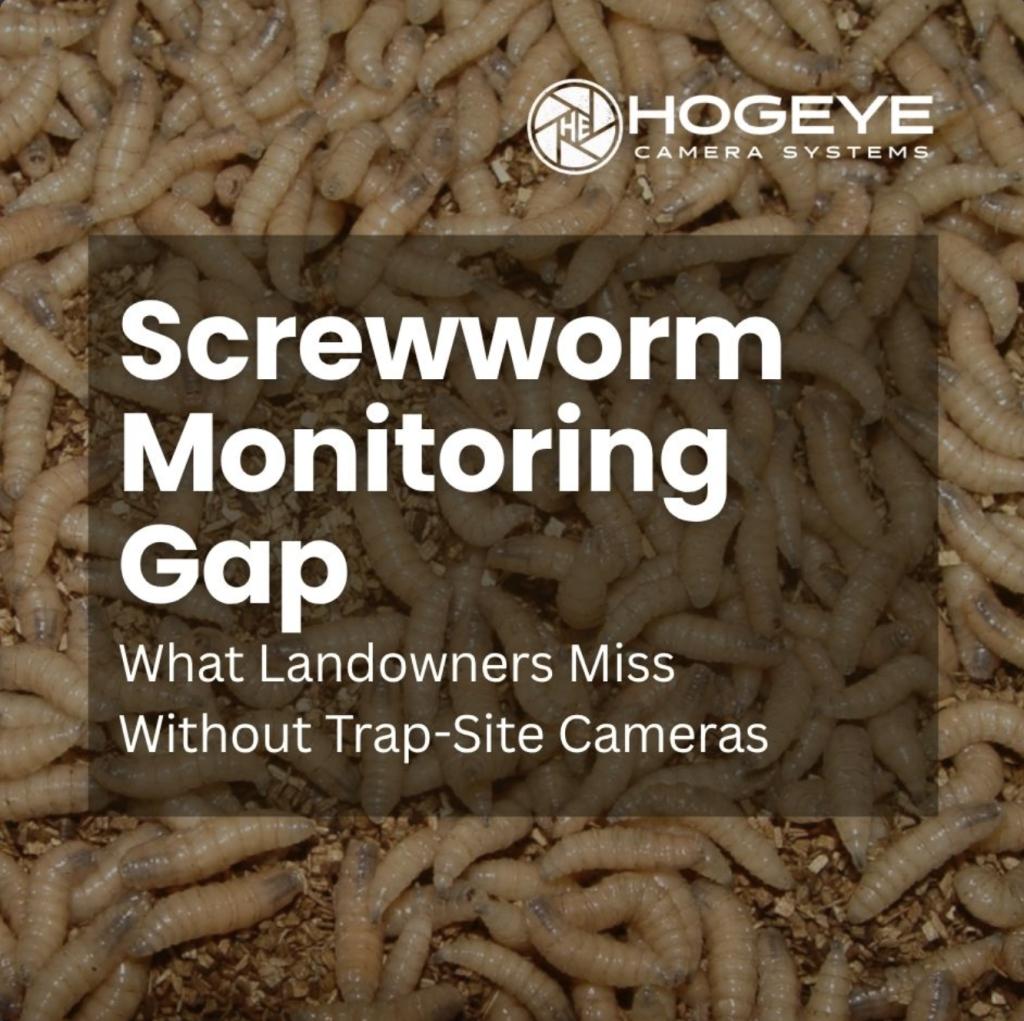
Landowners can tighten cattle checks during a New World Screwworm alert and still miss places cattle routines do not cover. Feral hog lines, wildlife crossings, wallows, and baited trap sites stay active after dark. If nobody is watching that corridor, the property has a monitoring gap.
The camera’s job is not medical. Per USDA APHIS, screwworm targets live, warm-blooded animals with fresh wounds, not feces. If you suspect a case, do not wait for better footage. Contact USDA APHIS and your state agricultural extension office for confirmation and reporting.
Where the Monitoring Gap Appears
Managed cattle are usually visible, handled, and checked on a schedule. Feral hogs are not. They move through brush, fence gaps, and low wet ground. They fight, rub, pick up cuts, and return to bait or water when nobody is there.
A weekly trap drive tells you what you can see that day. It does not show what crossed the site last night, whether a sounder started using a new approach, or whether pressure changed after a catch. Trap lines matter as observation points.
You already choose trap sites around concentration. Fresh rooting, trails, wallows, bait, and water pull hogs into a repeatable zone. A camera on that line can show which sounders use the property, when they move, and whether activity is building or fading.
What a Trap-Site Camera Can Do
A wild hog trap camera system is built for trapping first. Live video helps you count hogs, read commitment, and see inside and outside the trap before you send a closure command. During a biosecurity alert, that same view adds movement context without replacing animal health checks.
- Show when feral hogs are active at a monitored trap site
- Help separate hog movement from other wildlife at the bait edge
- Support whole-sounder removal by showing when the group is committed
- Reduce unnecessary drives to quiet, empty, or unchanged traps
Keep the lanes clear. The camera cannot confirm screwworm, identify larvae from video, or replace wound checks, agency reporting, or professional confirmation.
Build a Trap-Line Observation Layer
Start with the primary baited trap where you are conditioning or catching a sounder. If activity shifts, add a secondary crossing or shared water edge. Mount the camera for the decision you need: entrance, trap interior, and approach path in one view.
A purpose-built HogEye Steel Camera is designed for trap-site durability and live reads. Keep a short log with date, site, sounder estimate, catch outcome, and unusual activity. The camera resources library can support installation and field checks.
Use Monitoring to Improve Capture Timing
Remote monitoring and trapping should work as one routine. Watch the live feed. Let the sounder commit. Wait until the full group is inside and settled. Then trigger the gate when your closure criteria are met.
Early closure creates problems. A partial catch removes the bold animals and educates survivors. Those hogs may become harder to trap and may shift into a crossing you are not watching. Seeing the catch gives your team a better read on whether removal worked.
During an alert season, assign one person to review active feeds each morning and a backup who can send closure commands. Keep USDA APHIS and extension contacts beside the trap log. In slower periods, maintain a lighter camera health check so the blind spot does not reopen.
Practical Next Steps
- List the trap sites where feral hogs already concentrate
- Confirm each camera reports from the final mount location
- Review active sites before scheduling a drive
- Log sounder activity even when no catch occurs
- Report suspected screwworm without waiting for camera evidence
HogEye Mini is $1,299. The data plan is $49.99 per month on AT&T or Verizon, with no contract. See pricing and options when you are ready to put the first trap site online.
Frequently Asked Questions
Can a camera diagnose a screwworm infestation?
No. It supports observation and trap decisions only. Contact USDA APHIS and your state agricultural extension office if you suspect screwworm.
Why focus on trap sites?
Trap sites are where feral hogs already concentrate. One well-placed camera can cover a high-value movement corridor instead of trying to watch every acre.
Does screwworm breed in manure?
No. USDA APHIS describes screwworm as a threat to live animals with fresh wounds, not feces. Maggots in waste are a different fly.
Close the Trap-Line Blind Spot
HogEye gives landowners live trap-site visibility and remote closure control. You can see the corridor you are not driving at night, keep sounder records, and close when the full sounder is inside.