
Spartan shows up in a lot of cellular camera shopping lists, and for good reason. The brand is visible, the catalog is broad, and many landowners already know the name from general trail and property observation use. The question for a hog trap cameras is narrower: does that camera help you catch whole sounders, or does it only help you see that hogs were there?
This is a buyer’s framework for HogEye versus Spartan on hog trap cameras. It is not a model-year spec sheet. Specs change. The job does not. Use it to decide whether you are buying observation hardware or a wild hog trap camera system built around closure decisions.
Start With the Job, Not the Brand
Watching a feeder, a lane, or a scrape is an observation job. You want images or a clip when something moves. Trapping a sounder is a decision job. You need to know when the whole sounder is committed so you can trigger the gate or drop when they are inside, not before.
If you shop with observation criteria, almost any capable cellular trail camera can look attractive. If you shop with trapping criteria, the list shortens fast.
Criteria That Matter on Hog Trap Cameras
- Trap-aware monitoring. Does the system support reading sounder activity and committing the trap, or does it mainly deliver pictures after the fact?
- Durability at the trap site. Panels, weather, and abuse are normal. Hardware has to live bolted into that environment.
- Reporting where the trap actually sits. Bottoms and brush punish weak setups. The unit has to report from the trap, not from the truck on the road.
- Remote trigger fit. Can you close when the full sounder is inside without driving to the site?
- Support that understands trapping. Field problems are trapping problems first, electronics problems second.
Judge HogEye and Spartan against that list. The right answer is whatever improves full-sounder outcomes and cuts wasted trips.
How the Two Pull Apart
Spartan (general cellular trail / observation cameras)
Spartan is a major name in cellular trail cameras and related observation gear. That category is built to watch a location and deliver images or alerts across many landowner uses. For trapping, the limitation is purpose. An observation camera can confirm hogs are present. It is not purpose-built around sounder commitment, trap-site closure timing, or the abuse a working hog trap puts on hardware night after night.
If your main need is scouting or general activity awareness, a Spartan-style cellular trail camera can be a reasonable tool. If your main need is catching the sounder, you are asking it to do a different job than the one it was designed for.
HogEye (purpose-built hog trap monitoring)
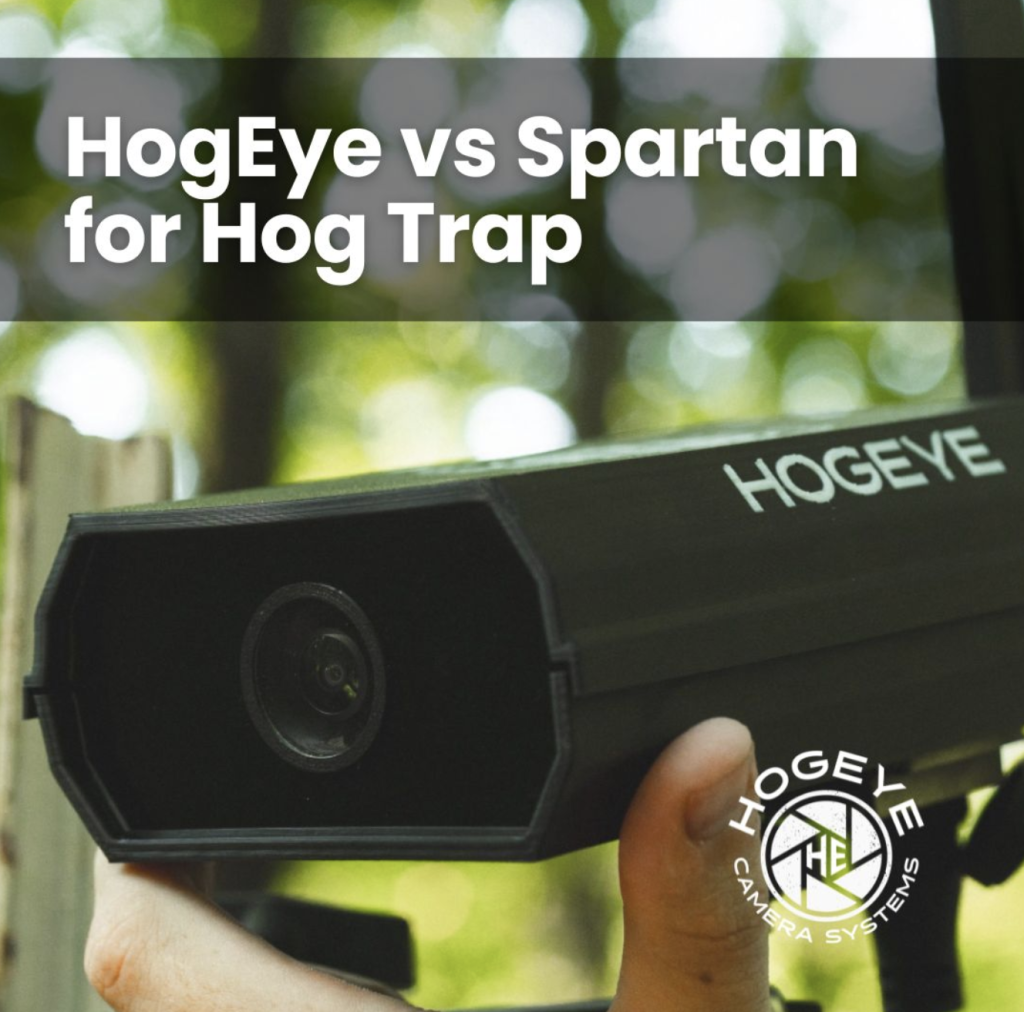
HogEye is built for one job: monitoring hog traps so operators catch whole sounders. That focus shows up in trap-site durability, monitoring oriented around the trapping decision, and remote trigger workflows through the HogEye app. The HogEye steel camera and related setups are meant to live on the trap, not on a quiet observation tree line.
The point is not that every general cellular camera is useless. The point is that purpose-built trap monitoring and general trail observation optimize for different outcomes.
Which One Should You Buy?
- Choose a general cellular trail camera path (including Spartan options) if you mainly need observation and are not running active trap closure decisions from the feed.
- Choose HogEye if the job is trapping feral hogs, counting the sounder, and triggering when the whole sounder is inside.
Plenty of operators start with a general camera and move to purpose-built monitoring after a partial catch educates the rest of the sounder. If you are already there, the upgrade is not a prettier picture. It is a system built for the catch. Compare pricing and options, and use the camera resources library to match a setup to your trap. More education lives on the HogEye blog.
Frequently Asked Questions
Is HogEye better than a Spartan camera for hog trapping?
For general observation, Spartan-style cellular trail cameras are capable tools. For trapping feral hogs and catching whole sounders, HogEye is purpose-built around the trapping decision and trap-site durability.
Can I put a Spartan camera on a hog trap?
You can use a general cellular trail camera to see that hogs are present. The limitation is that it is built for observation, not for reading a committed sounder and supporting remote trap closure.
What should I prioritize when comparing hog trap cameras?
Prioritize trap-aware monitoring, durability at the trap site, reliable reporting from the trap location, remote trigger fit, and support that understands trapping.
Why does purpose-built matter more than brand familiarity?
Brand familiarity tells you what is easy to buy. Purpose-built design tells you whether the system helps you close on a full sounder instead of educating survivors.
Does this comparison replace a side-by-side spec chart?
No. Model specs change. The durable comparison is the job: observation versus trap closure decisions.
Ready to Buy for the Catch?
HogEye is built for monitoring hog traps so you catch whole sounders, with hardware and workflows made for the trap site.
Talk with the HogEye team about the right setup for your trap line →