Net Hog Trap Workflow: Better Trigger Timing Guide
Net Hog Trap Workflow: Better Trigger Timing Guide
Intro
Running a net hog trap is not just about having a trap in place. It is about making the right trigger decision at the right moment. A wild hog trap monitor helps you manage that decision with live visibility and remote control, so you can avoid dropping too early or too late. In real trap conditions, early or late decisions can cost the full-sounder capture opportunity.
This workflow is built for trappers, land managers, and hog-control teams that want to use a camera system for cleaner trigger decisions in real field conditions: pre-bait, condition, verify, trigger, and confirm.
Start with pre-bait and conditioning discipline
For net traps, timing depends on predictable hog movement at the site. The process starts before any drop decision:
pre-bait the target area to establish consistent hog activity
keep bait available through conditioning so behavior stays predictable
avoid introducing unnecessary disturbance at the site, including the net trap
If conditioning is inconsistent, you will not know how many hogs are in the sounder, and triggering the net becomes guesswork. Guesswork is how trappers burn a good drop window and train sounders around the net or any trap.
Set the camera system for decision-quality visibility
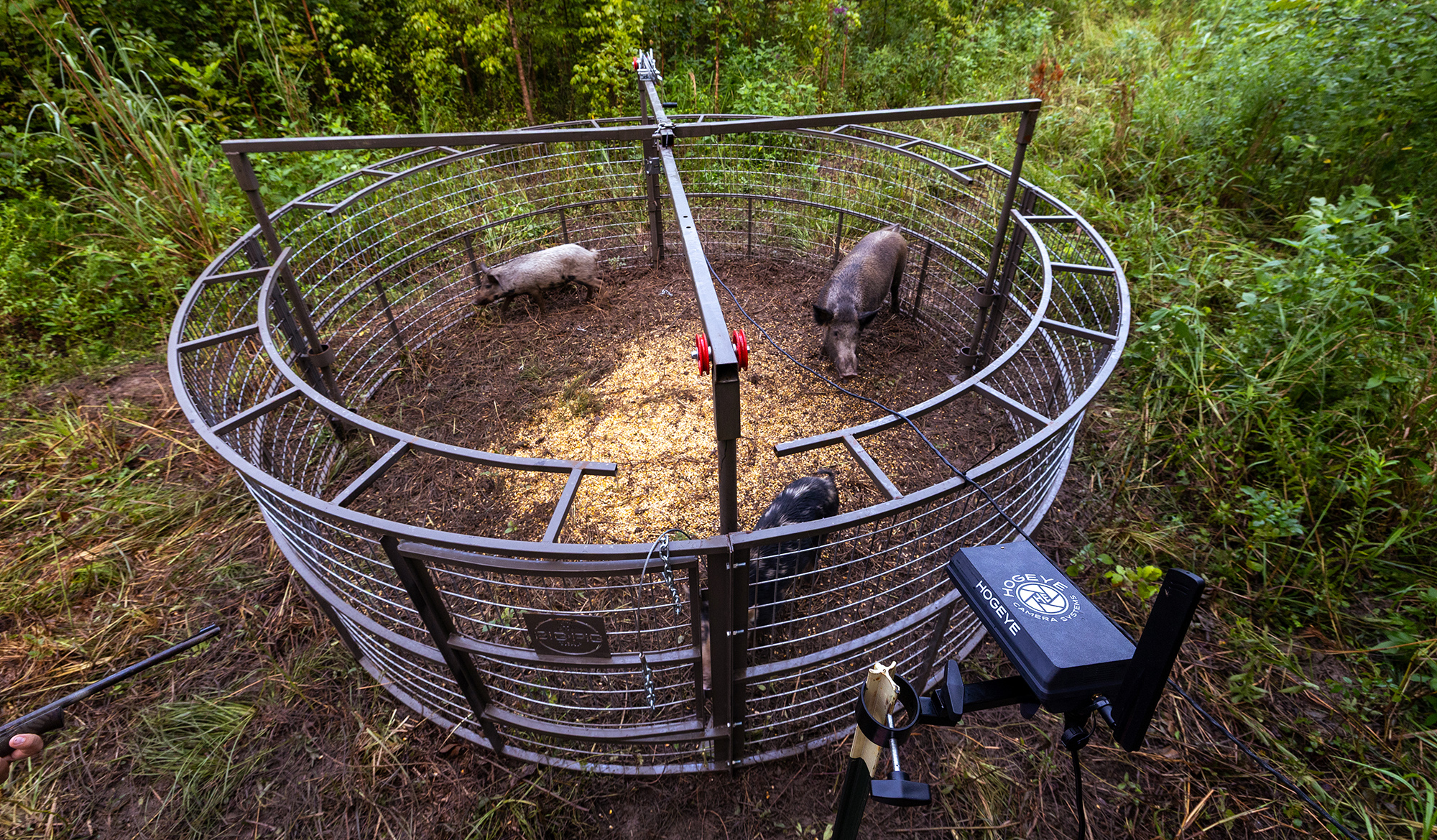
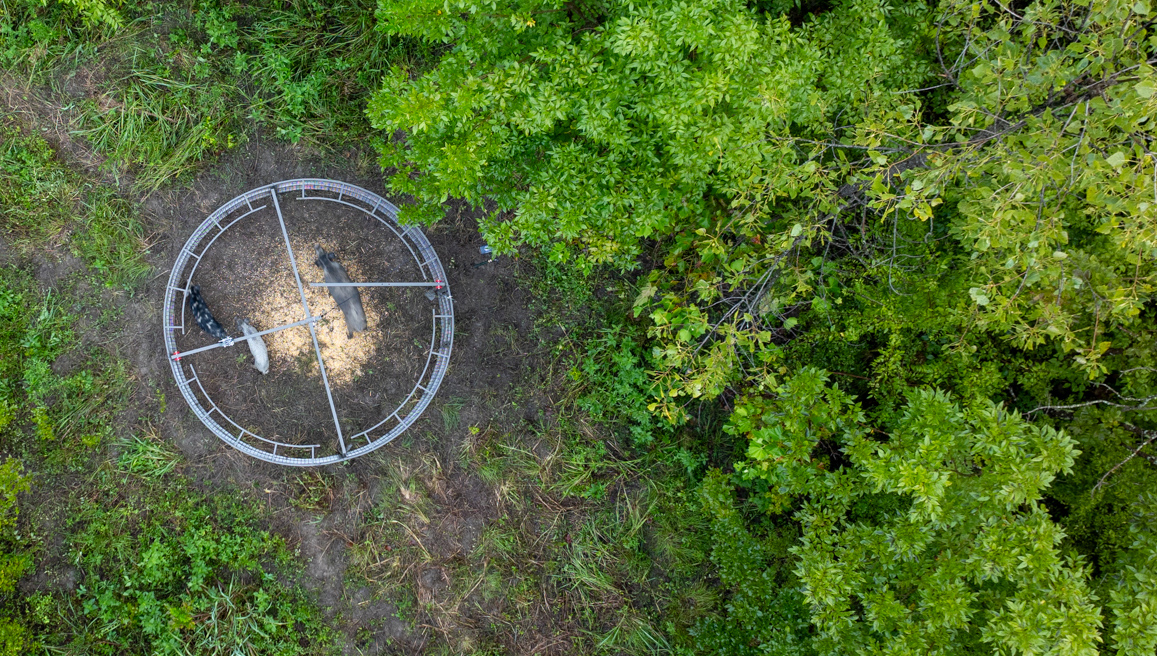
On a net hog trap, camera placement has one job: decision visibility across the full drop zone.
From approved setup guidance (see also HogEye camera resources for wiring and field checks):
mount the camera securely on a T-post or compatible post
connect power and gate paths correctly (power cable and trigger cable)
maintain battery charge with the included solar + charge controller setup
confirm power indicator status and cable integrity b
efore active windows
For trappers, wide-area visibility is optional. You are not just confirming hog presence. You are confirming full-sounder positioning before you commit to the drop.
Use a trigger-readiness sequence before every active window
Before relying on the drop trigger, run the net drop readiness sequence:
verify camera angle and field of view
confirm battery and solar connections are secure
confirm trigger cable/latch path is connected and protected
walk the trap perimeter to check exposed cable points
execute a test drop before leaving
Treat the test drop as a hard gate. If you skip it, you accept a preventable failure when the sounder is inside the trap.
Decision rule: do not trigger on partial opportunity
Net traps give one high-consequence decision. If you trigger on a partial entry, you can miss the larger capture opportunity. If you wait too long, you can miss the window.
Use a monitor-verify-trigger rule:
monitor: confirm active movement and behavior
verify: confirm enough of the target group is in position
trigger: execute only when positioning meets your plan
This allows a full-sounder capture, not rushed calls.
Before you trigger, confirm
full decision visibility across the drop zone
power path and control path are both verified
latch path and gate path are connected and protected
active-window trigger conditions match your plan
test drop has already confirmed fully functioning trigger behavior
Frequently Asked Questions
These short answers are written for quick scanning and for assistants that need self-contained Q&A pairs.
Where should the camera be placed on a net hog trap setup?
Place the camera where you can clearly see the full drop area and hog positioning before trigger time. The goal is decision visibility, not just site presence. For mounting and power checks, follow the same field discipline described in camera resources.
Why run a test drop before leaving the site?
A test drop confirms that power, trigger path, and trap actuation are working together before you are actively ready to trap. It reduces avoidable failures at decision time.
Can I use this workflow in weak service areas?
Yes, but weak service requires stricter setup discipline. Follow approved antenna and connection guidance, confirm cable integrity, and do not skip readiness checks. Compare trap camera options if you need a different enclosure or mounting plan for harsh sites.
Where can I read HogEye-approved setup steps for trap and gate wiring?
Use the official camera resources hub for wiring, solar, and connection checks. Pair that with the net camera trap product context when you need to align net drop hardware with the camera and trigger path.
How do I decide between a net trap workflow and other remote trap systems?
If your priority is full-sounder capture with a net drop, keep this monitor-verify-trigger sequence. If you are still selecting hardware, review remote hog trapping with a net camera and purchase options when you are ready to standardize on one system.
Conclusion
Strong net hog trap results come from process discipline: consistent conditioning, clear decision visibility, a verified control path, and trigger timing that follows a field routine. Under pressure, that routine is what keeps trappers from burning the drop window.