
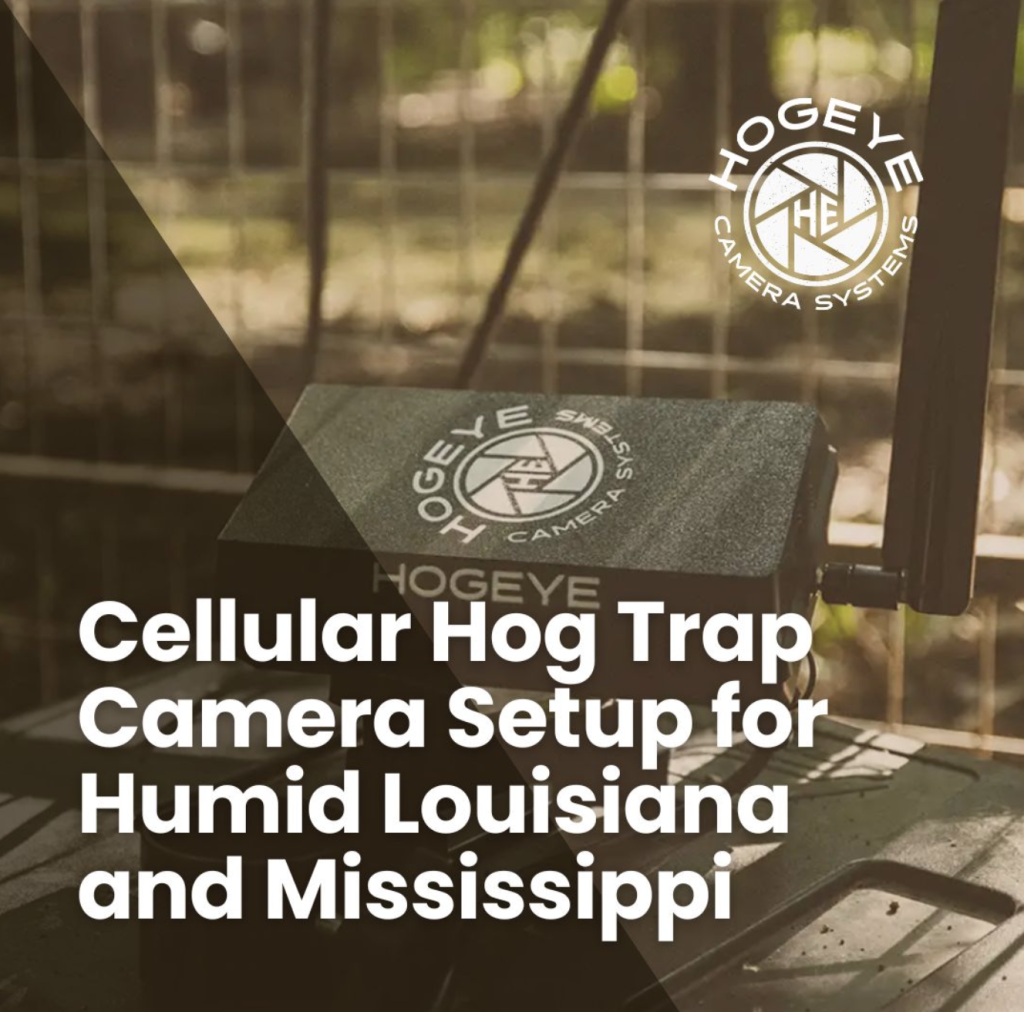
Louisiana and Mississippi trapping are particularly harsh on cameras. Heat and humidity stay high, canopy stays thick, and many productive sounder zones sit in bottoms where cellular signal already struggles. The trap can be right. The camera can still fail the night you need it.
Humid Louisiana and Mississippi cameras need a different install habit: placement that survives canopy and bottoms, power that holds through moisture and heat, and a clear read before you trust a remote closure decision.
Why LA and MS Trap Sites Are Hard on Cameras
Humid Gulf country stacks problems that dry upland sites do not see as often:
- Heavy canopy and summer foliage that absorb signal and block open sky toward the tower
- Low bottoms and wet drainages where hogs concentrate, and towers are farthest away
- Moisture and heat that stress mounts, seals, batteries, and solar output
- Night-heavy activity that makes wasted morning drives especially expensive
Texas shares some of these pressures. Louisiana and Mississippi lean harder on humidity, dense timber, and wet ground. Trap and camera placement need to take into account the different stresses these conditions impose, ensuring you can drop the trap when the sounder is present.
Placement Habits That Survive Humid Trap Lines
- Cover the decision, not just the bait pile. You need to see inside and outside the trap so you can see sounder activity, not only that something moved near corn.
- Favor the open edge for the antenna path. Keep trap coverage, but give the cellular path the least canopy you can without losing connectivity.
- Gain height when the bottom kills signal. A higher mount on the same site often beats moving the whole trap out of the sounder zone.
- Test from the final mount point. A bar on the county road does not count. Confirm reports from where the camera will live.
A durable HogEye steel camera setup is built for trap-site abuse in conditions like these. Use the camera resources library for install references while you standardize placement across sites.
Humidity, Power, and Uptime Checks
In LA and MS summer, uptime is a placement and maintenance problem as much as a hardware problem:
- Keep solar panels clear of leaf litter and angled toward the sun, not in deep shade under timber.
- Recheck mounts after storms. Soft ground and livestock pressure shift cameras off the trap.
- Confirm the unit still reports after multi-day rain, not only on the sunny afternoon you installed it.
- If cellular still will not hold at a productive site, evaluate the antenna, carrier, a short trap relocate, or a non-cellular path rather than pretending bars will improve on their own.
Continuous monitoring only helps if the site stays online through the weather that defines this region.
What to Watch Before You Trigger
Humid bottoms can make sounders show early and often. That is not permission to close early. Use live view to answer the same trapping questions every night:
- Are hogs entering and feeding, or only testing the edge?
- Is the full sounder accounted for across recent nights?
- Is bait holding them long enough for a clean commitment?
Trigger when the whole sounder is inside and settled. Partial captures educate survivors and set the site back. If you are running commercial drop or panel systems alongside the camera, keep product context at hog traps, and keep the monitoring decision on the feed.
Louisiana and Mississippi First, Same Playbook Nearby
Louisiana and Mississippi are particularly relevant here because humid timber and bottom sites are the daily reality there. The same placement habits apply to similar ground in Alabama and along the broader Gulf Coast. The job stays the same: reliable reports from the trap, fewer empty drives, and closure timing based on the full sounder.
When you are ready to put eyes on those lines, compare pricing and options and match the camera to the trap site you actually have, not the one with perfect bars on a map. If you’re unsure whether the area you want to trap is covered by cell service, call our team to check coverage or inquire about the HogEye Mini Sat Camera system for dense forests and hard-to-reach areas with limited cell service.
Frequently Asked Questions
Will a cellular hog trap camera work in Louisiana or Mississippi bottoms?
It can, with honest placement: open the antenna path, gain height when needed, and test reporting from the final mount point rather than the road.
What makes humid Gulf trap lines harder than drier sites?
Thick canopy, wet low ground, heat, and moisture stack against both signal and uptime, often in the same places hogs prefer to travel and feed.
Should I move the trap if signal is weak?
Try antenna, carrier, and mount height first if the sounder zone is productive. Relocate only when a short move still keeps hogs on bait and clearly improves reporting.
How is this different from a Texas remote monitoring guide?
Texas pieces often lead with distance and statewide pressure. Here the focus is humid Louisiana and Mississippi trap-line conditions: canopy, bottoms, moisture, and heat.
When should I trigger on a Gulf-south sounder?
Wait until the full sounder is inside and settled. Early activity in bottoms is common. Early closure is still how you educate the rest of the sounder.
Ready to Keep Eyes on Humid Trap Lines?
HogEye puts live monitoring and remote closure control on Louisiana and Mississippi trap sites so weather and distance stop running the schedule.
Talk with the HogEye team about camera setup for your LA or MS trap line →